 Buoywatch

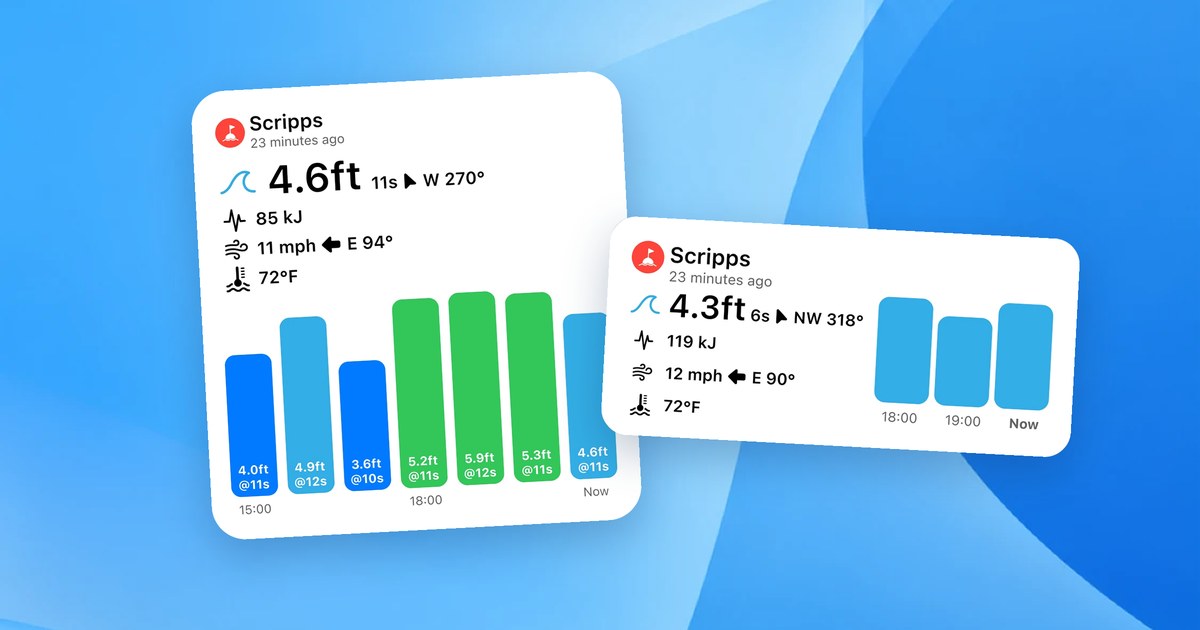
Observed: what the buoy measured
A buoy reading is a measurement. It tells you what the sea did at the buoy’s position during its last sampling period, and Buoywatch shows when that reading was taken. Observations cannot tell you about tomorrow, but they are the ground truth for right now.
Predicted: what a model expects
Surf forecasts are built on numerical wave models, such as NOAA’s WAVEWATCH III, which take wind forecasts and simulate how waves grow, travel and decay across the ocean. They are the best tool for planning days ahead, but they inherit the uncertainty of the wind forecast and the model’s resolution, especially near the coast.
Why check the buoys
- Timing: a swell can arrive earlier or later than forecast. Offshore buoys show it coming.
- Size: if the buoys read smaller than forecast, the surf probably will be too.
- Direction and period: buoys show what actually arrived, which decides whether your spot works.
Tides are a different kind of prediction
Tide predictions are calculated from the regular motions of the Moon and Sun and years of water-level records at each station. For a well-measured station they are very accurate. Weather such as strong onshore wind or low pressure can still raise or lower the water a little, which is why Buoywatch labels tides as predicted and buoy readings as observed. See How to Read a Tide Chart for Surfing.
A good habit
Plan with the forecast, then confirm with the buoys on the day. Over time you will learn how forecasts for your area compare with what the buoys, and the surf, actually delivered.