 Buoywatch

Two kinds of waves
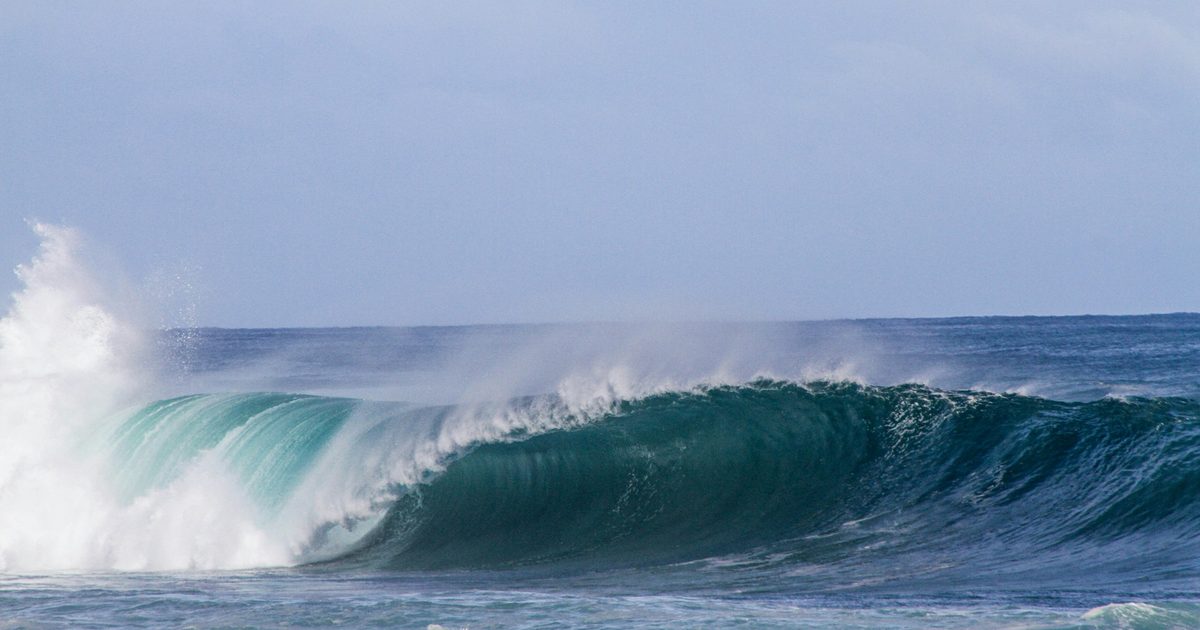
All ocean waves are made by wind, but where and how long ago makes a big difference. Windswell is created by wind blowing nearby, often within a few hundred miles. Its waves are short, steep and close together. Groundswell was created by a strong storm far away. As it travels, the waves sort themselves by period: the long-period waves move fastest and arrive first, as orderly lines of swell.
Period is the giveaway
The easiest way to tell them apart on a buoy is the dominant period. As a rule of thumb, periods of about 12 seconds and longer point to groundswell; periods under about 9 seconds usually mean windswell; anything between is a mix. The US National Weather Service describes swell as waves that have moved away from the area where they were generated, with longer periods than the local wind waves.
Why surfers care
Long-period waves carry more energy and feel the sea floor sooner, so they bend and focus on reefs and sandbars and break with more power. A 4 ft groundswell at 15 seconds can produce much bigger, cleaner surf than 4 ft of windswell at 7 seconds. Windswell can still be fun, especially when the wind that made it has dropped.
Seeing both at once
Often the sea has groundswell and windswell together. A buoy’s significant wave height combines all of it, while the dominant period shows which part carries the most energy. Watch for the arrival of a new groundswell: the period jumps (say, from 8 to 17 seconds) while the height is still small, then the height builds over the following hours.